“large leaf species” search results (500)

Learn more about coffee growing.
Buddha said, a flower a world, a leaf a bodhi. Instead of a coffee bean, I still look at this pure black liquid. After a year of growth, it has gone through harvesting, production, roasting, grinding, extraction, and finally condensed into that mellow taste. It's like everything that's been polished by time and hands, like wine, like jade, in a tiny void.
2014-10-17 Coffee knowledge Fine coffee learning Coffee growing
What are the coffee beans for fine coffee learning?
Seed selection is a very important factor in crop cultivation. Agricultural scientists are studying better and higher yield varieties of wheat, soybeans and corn every year. They are also studying how to make apples taste better and more beautiful and resistant to pests and diseases. In fact, coffee is the same. The quality and taste of coffee are determined by the quality of varieties. The industry generally divides coffee trees into three categories: Arabica
2014-11-19 Coffee knowledge Fine coffee learning Coffee beans
Introduction to the balanced and soft flavor of El Salvador boutique coffee
The civil war caused chaos and affected economic development, but ironically allowed the ancient coffee to be preserved, and the situation was so chaotic that coffee producers in El Salvador failed to catch up with the renewal of coffee varieties in Central and South America. El Salvador produces 100% Arabica coffee, of which 68% is Bourbon, Coffea arabica var. Bourbon), 29% Pacas, the rest
2016-07-16 Balanced soft El Salvador coffee flavor taste introduction
Species botany of coffee beans
Scientific taxonomy of coffee: Plantae phylum: embryonic phylum Spermatophyta (unclassified) true dicotyledons eudicots core true dicotyledons core eudicots class: angiosperms Angiosperma (ungraded) chrysanthemum asterids lip-shaped branches lamiids: Gentianales family: Rubiaceae Rubi
2014-06-30 Species of coffee beans botany
Classification of coffee introduction of coffee types introduction of boutique coffee beans
Classification of plants Coffee beans Coffee trees belong to the evergreen tree of Rubiaceae. Rubiaceae plants have been dominated by plants with special effects since ancient times, such as quinine tree, which is regarded as a specific drug for malaria, and Dugen, which is used to treat amoeba dysentery. Coffee is defined as the most unique alkaloid drinking flora. The fruit of coffee consists of outer skin, pulp, endocarp, silver skin, and the above-mentioned layers.
2016-06-28 Coffee classification introduction category boutique coffee beans plants coffee
Varieties of coffee beans
According to the variety of coffee beans (Coffee Bean) can be divided into three types of coffee beans are: Arabica coffee contains about 1% per cent by weight of caffeine, generally speaking, the better quality, more expensive coffee beans, are from Elaraby (Arabica) coffee beans. Accounts for 3/4 of the world's output, good quality, due to the coffee tree itself
2014-06-26 Boutique coffee beans individual coffee beans coffee bean types
Brief introduction of coffee producing countries: Indonesia
Indonesia, the country of Thousand Islands, has the largest number of islands in the world. When it comes to Indonesia, the most familiar is probably the resort island of Bali. A brief History of Coffee in 1696, the Governor of the Netherlands in Malabar, India, gave a batch of coffee seedlings to the Governor of the Netherlands in batavia in Batavia (present-day Jarkata in Jakarta). This was the first time that coffee was grown in Indonesia. But
2014-09-03 Brief introduction of Coffee producing countries
Boutique Coffee Science explains in detail the knowledge about coffee trees
Coffee trees are evergreen shrubs or trees belonging to the Rubiaceae family. Wild coffee trees can grow to a height of 5 to 10 meters, but coffee trees planted in the manor are often cut to a height of less than 2 meters in order to increase fruit and facilitate harvesting. The opposite leaf of the coffee tree is long oval, the leaf surface is smooth, the end branch is very long, the branch is few, and the flower is white, opening at the base of the petiole connecting the branch.
2014-11-13 Coffee knowledge boutique coffee science coffee tree
Introduction of Coffee Bean Origin and Variety Coffee Bean species and comparison
The history of coffee cultivation in Colombia can be traced back to the Spanish colonial era in the 16th century, and there are many theories about the history of coffee in Colombia: one: it is said to come from the island of Haiti in the Caribbean and from El Salvador in Central America. Second: in 1808, a priest introduced coffee beans to Colombia for the first time from the French Antilles via Venezuela. One of them
2016-05-25 Coffee beans origin variety introduction type comparison Colombia cultivation coffee
El Salvador Coffee Manor with excellent taste introduction to boutique coffee
The civil war caused chaos and affected economic development, but ironically allowed the ancient coffee to be preserved, and the situation was so chaotic that coffee producers in El Salvador failed to catch up with the renewal of coffee varieties in Central and South America. El Salvador produces 100% Arabica coffee, of which 68% is Bourbon, Coffea arabica var. Bourbon), 29% Pacas, the rest
2016-09-08 Excellent taste El Salvador coffee manor producing area flavor characteristics boutique introduction
To show you the true face of coffee.
Small and round dark brown coffee beans, quietly emitting a fragrant fragrance in the grinder, injected into the cup showing the beautiful color of amber, these are the three very deep impressions of coffee. As you explore the history and beauty of coffee, you can also see the coffee trees that are caressed by the tropical sun and whose leaves twinkle. It has small white flowers similar to jasmine.
2014-08-22 Coffee knowledge coffee tree species coffee powder Yunnan coffee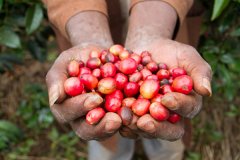
The species of coffee, tell me what kinds of coffee trees there are.
The coffee beans we usually see are red fruits on trees, seeds without peel and pulp. It is a kind of plant, so there will naturally be different tree species, just as there are many kinds of apples. There are two main categories visible in the market: Arabica and Robusta (rough flavor, caffeine more than twice as high as Arabica, not a boutique coffee variety. But in recent years, India
2015-10-26 Coffee tree species say all have what variety
Introduction to the method of describing the Flavor of Cerro Asul, a single Coffee of Hope Manor in Colombia
Colombia hopes to describe the flavor of manor coffee. Colombian coffee is mainly small-grain coffee. Plants are small trees or large shrubs, 5-8 m tall, usually much branched at base; old branches gray-white, nodes dilated, young branches glabrous, compressed. Leaves thinly leathery, ovate-lanceolate or lanceolate, 6-14 cm long and 3.5-5 cm wide, tip long acuminate, acuminate part 10-1 long
2016-10-24 Columbia Hope Manor Rose Summer Coffee single Pint Roasu Flavor description
Sunburn treatment of Shumawa Manor in Costa Rica, is the Vera sa odd species Robusta or Elaraby?
Global coffee bean tree species are mainly divided into: Arabica and Canephora, of which Arabica coffee beans account for more than 100 coffee varieties of 70%80%coffee. The more common coffee varieties are: Arabica Arabica, with outstanding personality and unique flavor, is the main force of boutique coffee, mainly used in coffee shop management and high-end coffee market supply; Robsta
2016-04-22 Costa Rica Shumawa Manor Solar processing Vera Saatchi Robbs
Description of Flavor of Yunnan small-grained Coffee Huaguoshan Flavor introduction to the characteristics of varieties producing grindness
The small seed species are also called Arabian species, the medium seed species are also called Ganfla species, and the large seed species are also called Liberian species. There are two common species: Arabica and Robusta. Coffee is rich in protein, fat, sucrose, starch, caffeine and other substances. after being made into a beverage, coffee is rich in aroma, delicious taste and rich nutrition, so it has become the world's three major beverages composed of tea and cocoa.
2016-10-10 Yunnan small grains Coffee Huaguoshan Flavor description Grinding Taste Variety producing area
Basic knowledge of coffee Common sense of the definition of fine coffee 2
With regard to the cultivation of crops, seed selection is a very important factor. Every year, agronomists are studying higher quality and higher yield varieties of wheat, soybeans, and corn, as well as how to make apples more delicious, beautiful and resistant to diseases and insect pests. In fact, the same is true of coffee. The quality and taste of coffee are determined by the quality of the varieties. Coffee trees are generally divided into three categories in the industry: Arabica species
2014-12-26 Coffee basics common sense boutique definition about crops planting seed selection important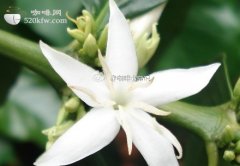
Coffee knowledge Coffee plants
Coffee plants: several to dozens of clusters in leaf axils, the second to fifth flowers on a flower axis. White, fragrant. The middle and small seeds have 5 petals, and the large seeds have 7 - 8 petals. Flowers tubular, terete. The stamen number is many and petal number is same, stamen stigma is bifid, ovary inferior, it is 2 rooms commonly, also have 1 room or 3 rooms. Insect-matched flowers, large-grain seeds and small-grain seeds
2014-09-17 Coffee knowledge coffee knowledge coffee encyclopedia coffee plants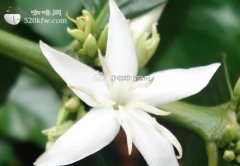
Coffee plants
Coffee plants: several to dozens of clusters in leaf axils, the second to fifth flowers on a flower axis. White, fragrant. The middle and small seeds have 5 petals, and the large seeds have 7 - 8 petals. Flowers tubular, terete. The stamen number is many and petal number is same, stamen stigma is bifid, ovary inferior, it is 2 rooms commonly, also have 1 room or 3 rooms. Insect-matched flowers, large-grain seeds and small-grain seeds
2014-09-19 Coffee knowledge Coffee encyclopedia Coffee plants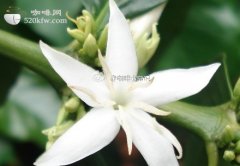
Coffee Plant Articles Fine Coffee Basic Common Sense
Coffee plants: several to dozens of clusters in leaf axils, the second to fifth flowers on a flower axis. White, fragrant. The middle and small seeds have 5 petals, and the large seeds have 7 - 8 petals. Flowers tubular, terete. The stamen number is many and petal number is same, stamen stigma is bifid, ovary inferior, it is 2 rooms commonly, also have 1 room or 3 rooms. Insect-matched flowers, large-grain seeds and small-grain seeds
2015-07-30 coffee plant boutique basic common sense several dozens cluster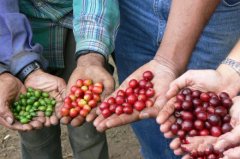
Tell me about the varieties of coffee beans.
According to the variety of coffee beans (Coffee Bean) can be divided into three types of coffee beans are: Arabica coffee contains about 1% per cent by weight of caffeine, generally speaking, the better quality, more expensive coffee beans, are from Elaraby (Arabica) coffee beans. Accounts for 3/4 of the world's output, good quality, due to the coffee tree itself
2014-06-28 Coffee beans coffee beans Arabica Rubebeca